
The Eternal Chain was a multimedia gallery exhibition created for Dublin City University’s Emerging Media course thesis. The exhibition, put together by Kathryn Bower (visuals) and Declan Coles (audio), was open to the public on July 16th and 17th in 2025.
The Eternal Chain combined audio and visual elements to explore modern Irish society and identity framed by mythology. This exhibition examined and celebrated multiculturalism, diversity, and identity within modern Ireland through the lens of the medieval poetry collection Lebor Gabála Érenn (Book of Invasions).
The multimedia gallery exhibition was comprised of five pieces, inspired by five passages from the Book of Invasions and collective research on Ireland’s historical and present-day national identity and population. These pieces reflected on topics such as language, gender, sexuality, colonialism & post colonialism, national identity, landscape, and immigration.
A playlist of digital versions of the five gallery pieces can be found here.
The visuals used a mix of printed still image, and digital animated photography to bring the five book passages to life. All visuals were conceptualized, photographed, edited, and animated by Kathryn.


Gallery Pieces
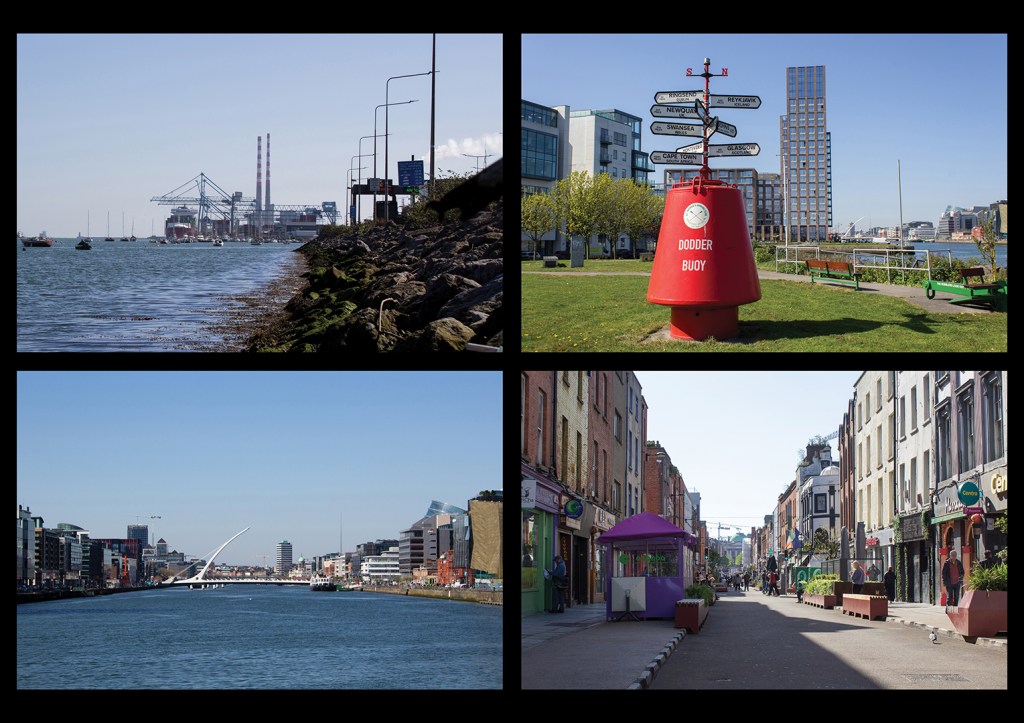
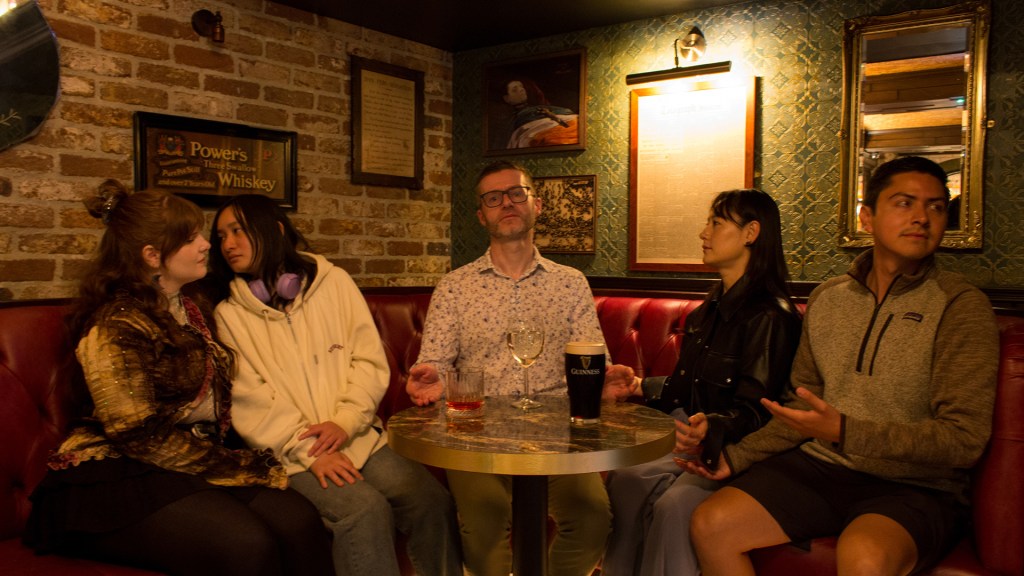
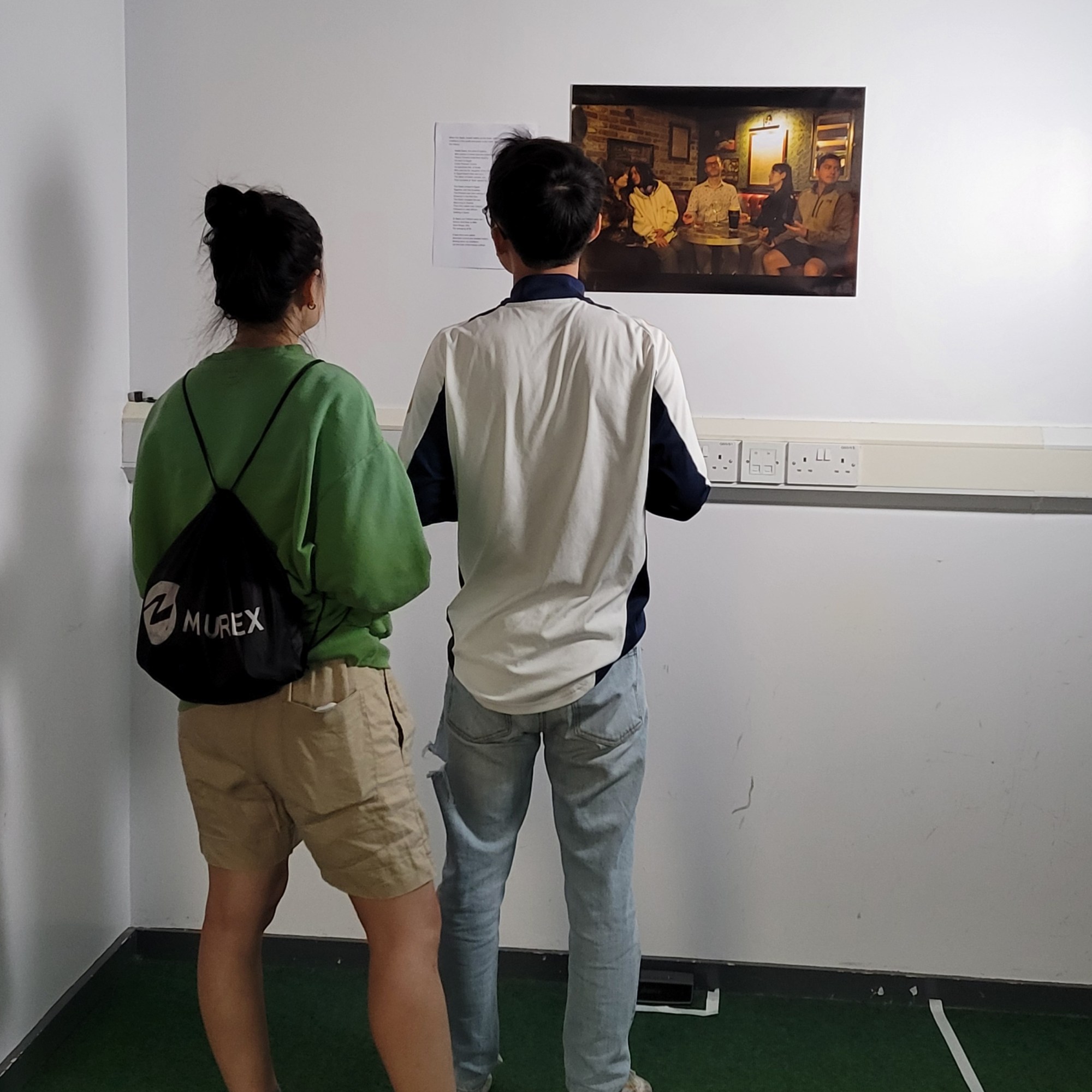
Pieces 1 and 5 were displayed in the gallery as still image prints with accompanying audio playing from a speaker. The left image set, paired with a passage from the mythical book about the formation of the Gaelic language from 72 languages, features the Dublin Docklands and harbour, representing historical immigration, emigration and cultural exchange. The image set also features the Dodder Buoy, its signs pointing to cities around the world, and the multicultural businesses of Capel Street.
The right image, based on a passage where a poet reflects on the long and diverse legacy of the Gaelic people, is inspired by Leonardo da Vinci’s The Last Supper and John Byrne’s Dublin’s Last Supper. This reference calls on the biblical elements of the Book of Invasions, and connects it to both the historical art piece and its modern, diverse, version meant to represent the people of Dublin.
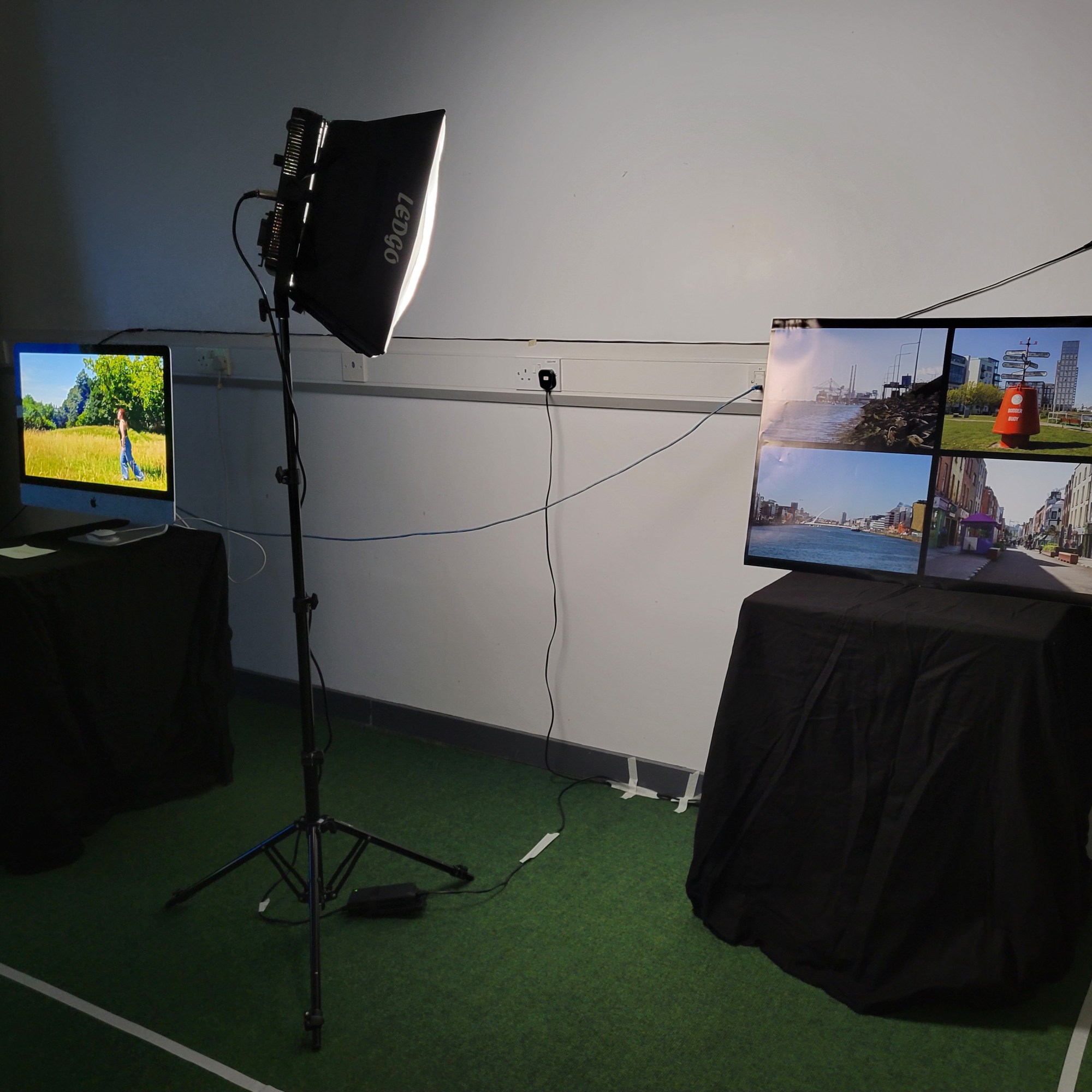
Pieces 2 and 4 were image animations displayed on monitors in the gallery space. There were no audio accompanying these pieces. Instead the following captions were displayed:
Left: “Tuan, the last of the Partholonians, witnessing the arrival and departure of the Nemedians.”
Right: “Banba, Ériu, and Fódla: eponymous Irish goddesses of the mystical Tuatha Dé Danann.”
These animations, each based on different mythical groups in the book, explored different factors of Irish identity: immigration & emigration, and gender & sexuality.
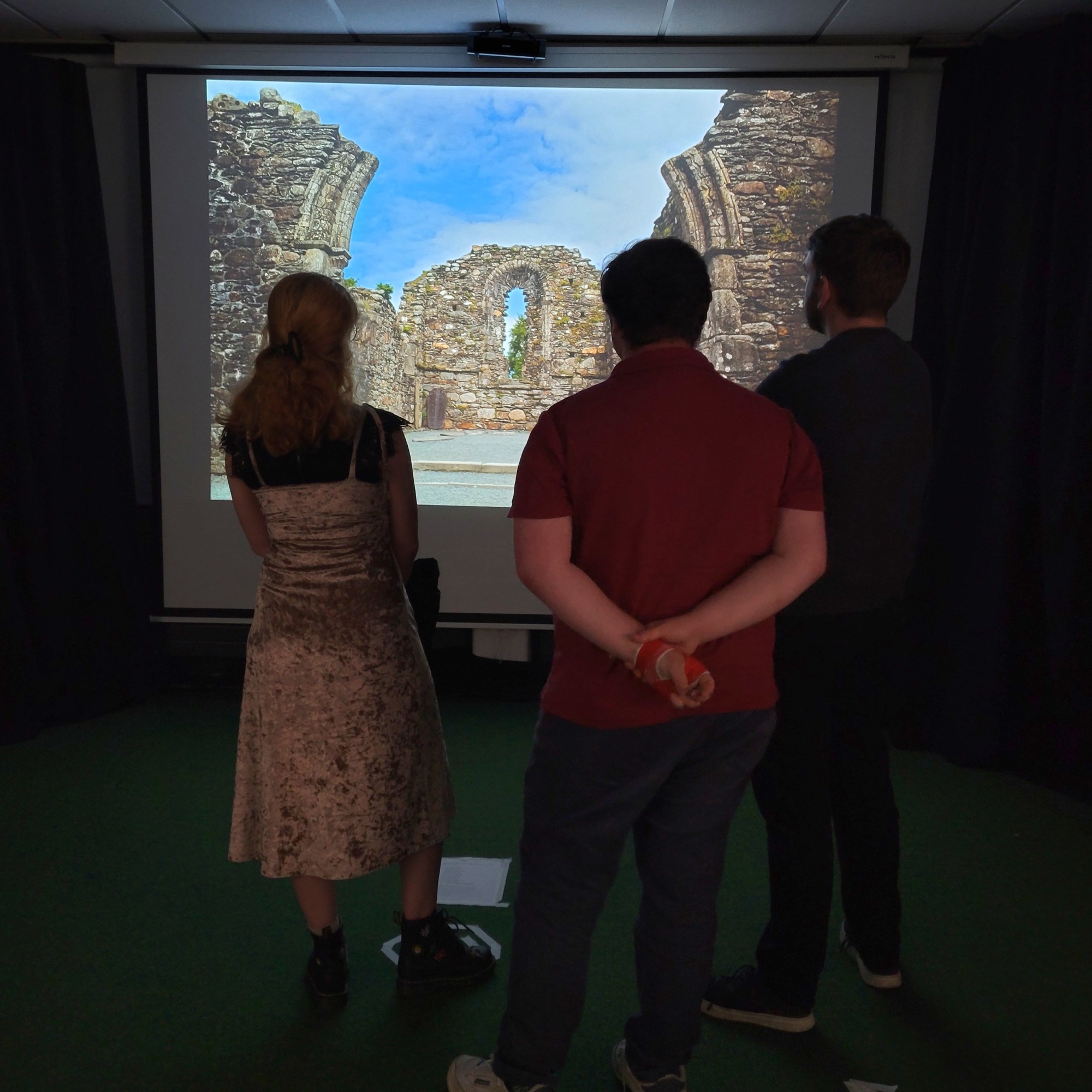
The third and central gallery piece, Amairgin’s Poem, was projected on a large screen in the gallery space. Based on the English translations by R.A.S Macalister, Lloyd Graham and Paddy Bushe, this poem is spoken by the mythical figure Amairgin as he sets foot on the island of Ireland for the first time. Inspired by the imagery and personification of nature in the poem, this piece connects the environment with national identity. The different voices and faces of the poem present and celebrate Ireland’s multicultural identity.
 Kathryn Bower